Chances Are You Don’t Know Your Skin Type.
One of the first questions I ask when I have someone sitting in my chair is ‘what’s your skin type?’. I’m often met with ‘ummmmm’, ‘you tell me’ or ‘I don’t know’.
It’s hard to find time to do your skincare routine morning and night, let alone finding the time to research the right products for you. It’s made even harder when you don’t know how to identify your skin type in the first place. If you've identified it incorrectly, you could be using products that work against your skin instead of with it.
The honest truth is that your makeup is only as good as your skin underneath. I’ve written a guide so you can learn your skin type and have beautiful glowing skin (and a perfect base for makeup), Along with an easy visual guide at the end!!
What is a Skin Type?
Your skin type refers to your skin's baseline characteristics, primarily how much oil (sebum) it produces, its hydration levels, and its sensitivity to products or environmental factors
While it can fluctuate slightly with age, hormones and weather, your skin type generally stays the same throughout your life.
Skin type isn’t to be confused with skin conditions*.
Why Knowing Your Skin Type Matters
Your skin type influences almost everything makeup and skin related:
Which cleansers will work best for you
How much hydration your skin needs
Whether lightweight or richer moisturisers are a better choice
Which makeup formulas will wear better for you throughout the day
How your skin responds to different ingredients
There are 4 Main Skin Types
Oily skin
This means your sebaceous (oil) glands are overactive and naturally produce more oil than average.
Common signs include:
Enlarged pores
Shine appearing throughout the day (not skincare related)
Makeup separating or sliding off
Frequent congestion or blackheads
Best skincare practice:
Double cleanse to remove impurities without triggering the overproduction of oil:
Gentle oil cleanser
Foaming cleanser
Use active ingredients:
Salicylic Acid (BHA) - travels deep into pores to dissolve excess oil & clear congestion.
Niacinamide - Helps regulate oil production & minimise the appearance of pores.
Use a lightweight moisturiser.
Dry Skin
Dry skin lacks oil and often struggles to retain moisture.
Common signs include:
Tightness, especially after cleansing
Flaking or rough texture
Makeup clinging to dry patches.
Best skincare practice:
Double cleanse at night. Double is only necessary if you’ve worn makeup or sunscreen.
Gentle oil cleanser (if need be)
Milky cleanser
Use active ingredients:
Hyaluronic acid - draws water into the skin, helping it feel plump and hydrated.
Ceramides - help repair the skin barrier and reduce moisture loss. Lots of milky toners have ceramides
Use a rich moisturiser to lock in hydration.
Combination Skin
Combo skin means you have both dry & oily skin in different areas on your face.
Common signs include:
Forehead, nose and chin (the T-zone) become oily throughout the day
Cheeks or outer edges of the face feel normal or dry
Best skincare practice:
Double cleanse focusing on the centre of your face to remove excess oils and prevent sebum build up:
Gentle oil cleanser
Gentle foaming cleanser
Use active ingredients on target areas of the face:
Niacinamide & salicylic acid on T-zone to clear congestion & unclog pores
Hyaluronic acid & ceramides around cheeks to hydrate and repair the skin barrier
Use a lightweight moisturiser that hydrates without feeling greasy.
Balanced Skin
Balanced skin isn't perfect skin, it just means your skin feels comfortable most of the time.
Common signs include:
Little to no excess oil
No persistent dryness
Few ongoing concerns
Makeup generally wears well throughout the day
Best skincare practice:
Double cleanse at night if you’ve worn makeup or sunscreen:
Gentle oil cleanser
Gentle cream cleanser
Balanced skin doesn't need lots of active ingredients. The goal is to maintain a healthy balance.
Use a lightweight moisturiser.
Skin Type vs Skin Conditions
This is where people get confused. Your skin type is what your skin naturally is.
Your skin conditions* are generally temporary things you're trying to improve.
For example, you can have:
Oily skin with dehydration.
Dry skin that's acne prone.
Combination skin with sensitivity.
Balanced skin with pigmentation.
These concerns can change over time, but your skin type usually stays relatively consistent.
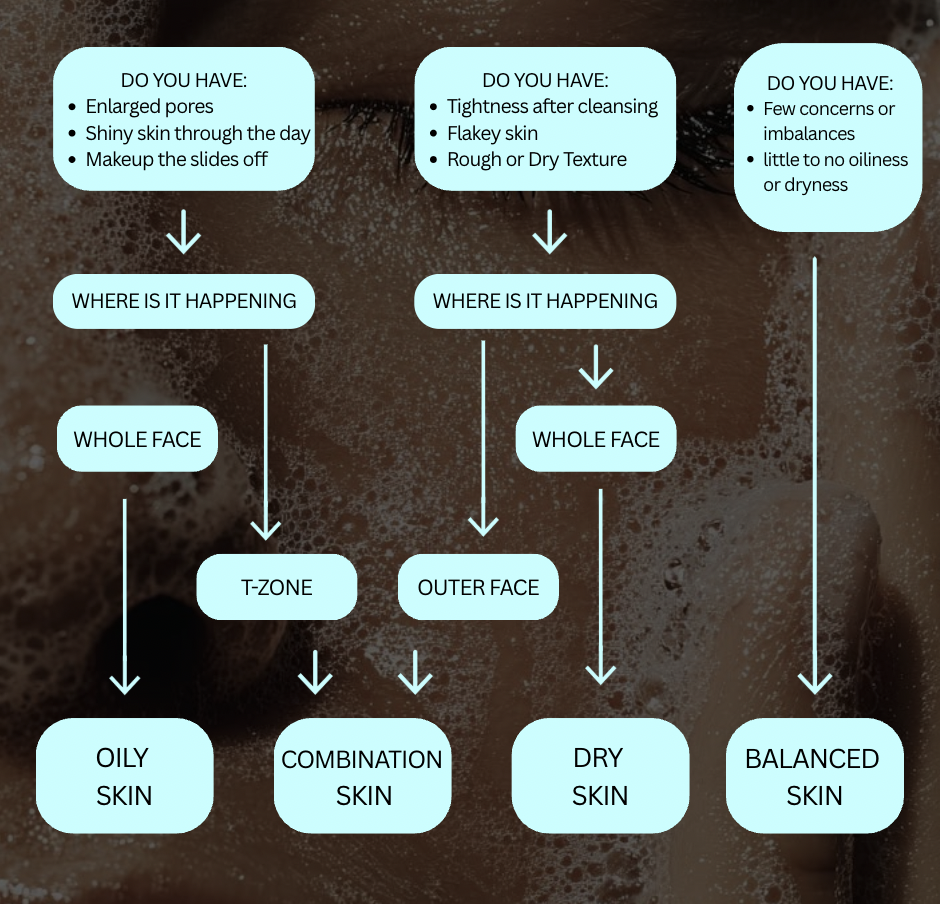
Skin Type Cheat Sheet
I’ve made a cheat sheet to make it super easy to find your skin type!
Final Thoughts
Identifying your skin type is one of the easiest ways to improve your skincare & makeup routine. Once you know what your skin actually needs, choosing products becomes much easier, and you're less likely to waste money on products that don’t suit you.
After reading this guide you should be well on your way to beautiful glowing skin!!
Anna xxx
